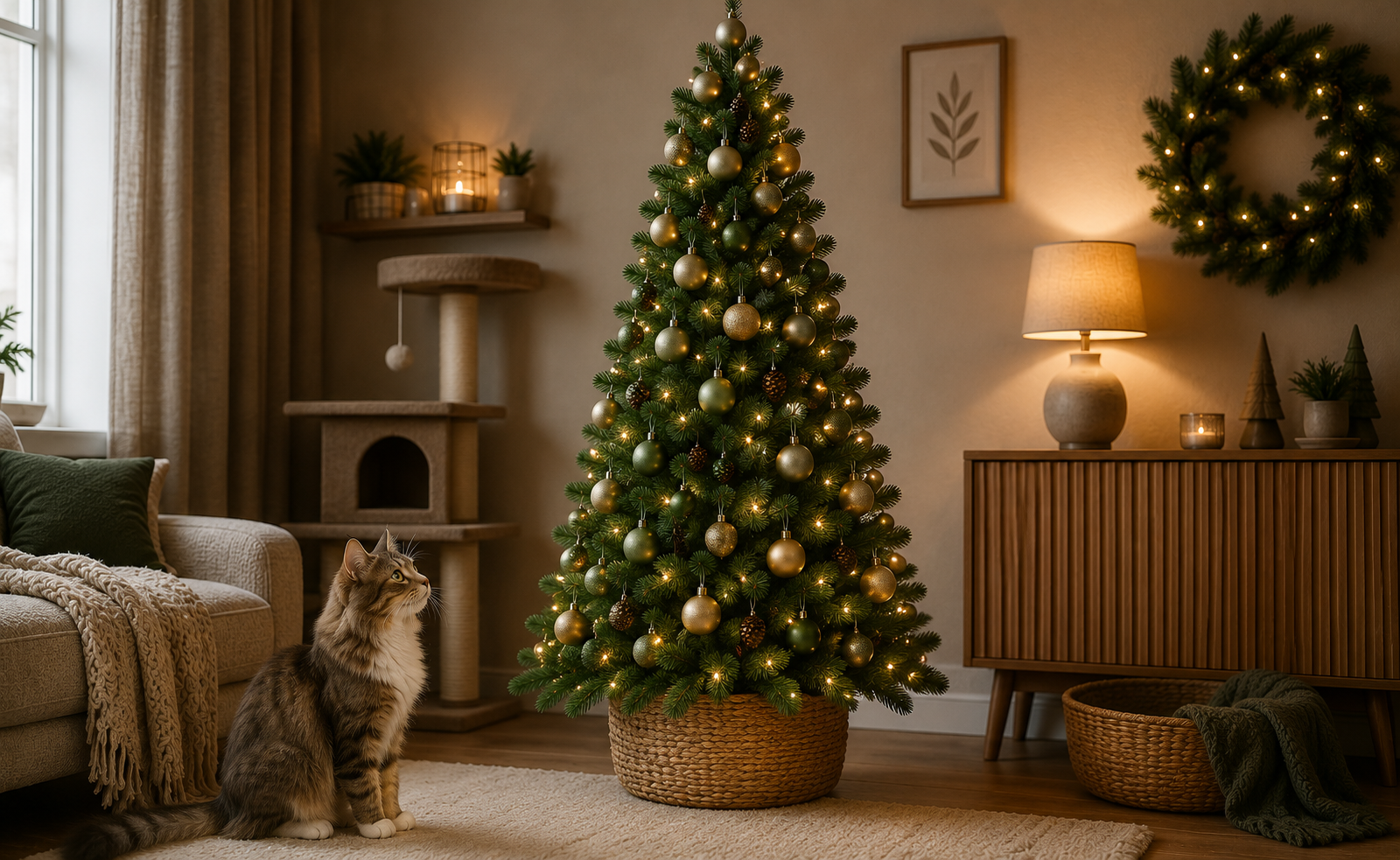


The difference between real (natural) and artificial Christmas trees involves several aspects – ecological, aesthetic, and economic.
Real Christmas Tree
Advantages:
Disadvantages:

Artificial Christmas Tree
Advantages:
Disadvantages:
The choice between a real and an artificial Christmas tree depends on your priorities – whether you prefer a natural atmosphere and the scent of pine, or practicality and long-term use. A real tree offers an authentic experience but requires annual purchase and care. An artificial tree is more convenient and economical in the long run, but its ecological footprint is higher, especially if it’s not used long enough.
Whatever you decide, the most important thing is that Christmas brings joy, peace, and a beautiful atmosphere to you and your loved ones.